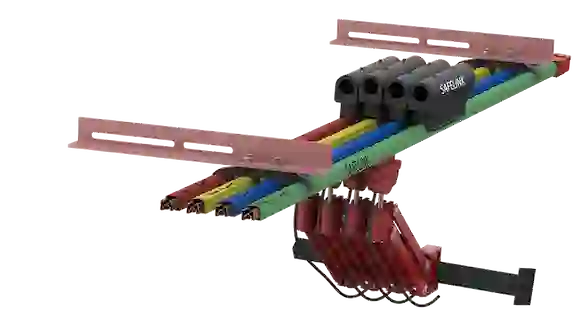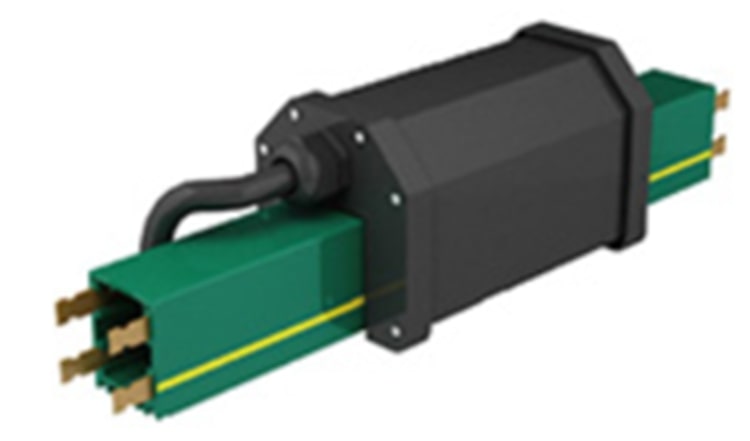
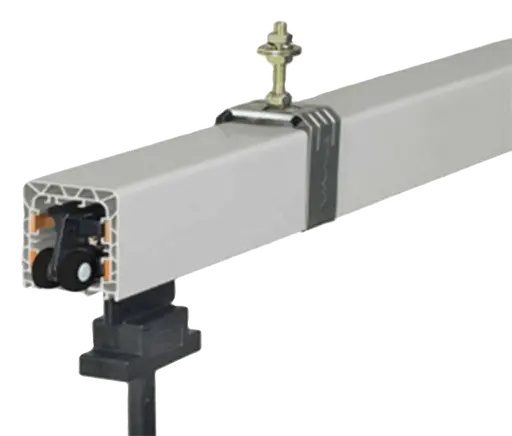
Enclosed conductor line SLE is a hazard protected conductor systems for indoor and outdoor installations.

Safelink Enclosed Busbar

Download Catalog
Safelink Enclosed

Materials & Ratings

Copper - 40A,60A,80A,100A
120A,140A,160A

Insulated Box type DSL

We are providing DSL Busbar Alignment & installation Service to all parts of India.
Kindly call Sales 9137620579 or email us at info@anandcontrol.in
A.

Safelink Enclosed Busbar Product Description

It is protected to IP23 standards. The conductor line in a rigid gray PVC housing with different copper cross sections for rated currents of 40Amp to 200Amp. The current collector running in ball bearing are guided by the housing. The main is transferred by spring-stored carbon brushes. A compact design, corrosion resistance and easy installation are the main characteristics.

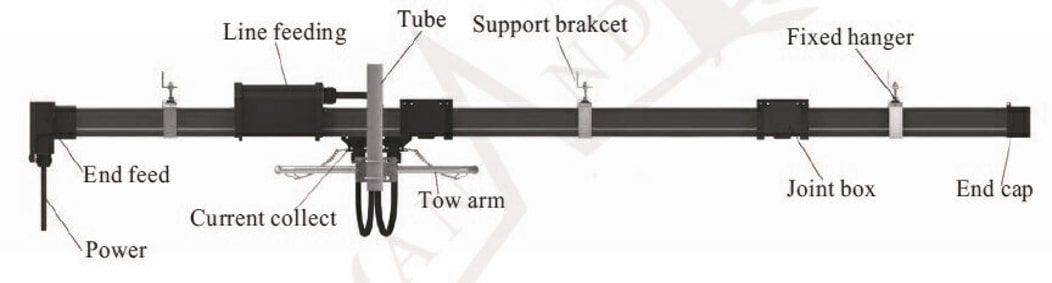
Safelink E busbar Profile

Safelink Enclosed Conductor System

Safelink M busbar 2 Dimensional picture

Applications of Enclosed DSL Busbar

For mobile power consumers like cranes, monorails, electrical hoists, conveyor systems, machines tools, automated storage, retrieval systems, lighting systems etc.

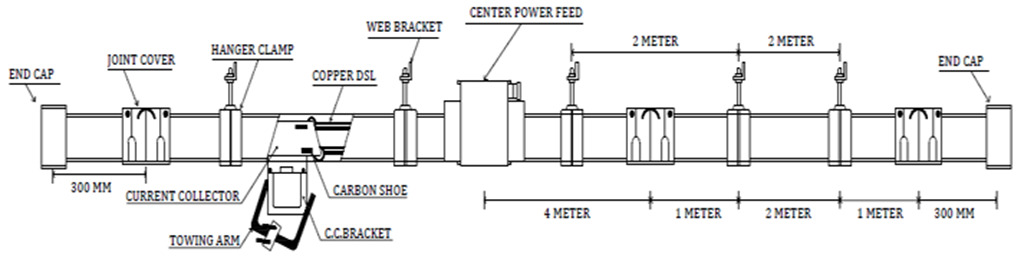
Safelink Enclosed Conductor System

Safelink M busbar 2 Dimensional picture

Electrical Specifications

Electrical properties: Mechanical properties:
Max.current 240A Flexible strength 75N/mm ±10%
Max.voltage 660V Tensile strength 40N/mm ±10%
Dielectric strength 30-40KV/mm Temperature range:
Spec.resistance 5 x 10¹⁵ohm xcm Standard Housing -20C up to +70C
Surface resistivity 1013ohm xcm High Temp. Housing -10C up to +115C
Leakage resistance CTI600-2.7 Low Temp. Housing -40C up to +80C
Combustibility:
Flame retardant B1
Self extinguishing Class B1-no flaming particles,self-extinguishing
Resistance to chemicals: +45C
Gasoline Sulphuric acid 50 %
Mineral Oil Caustic Soda25% and 50%
Grease Hydro-chloric acid, concentrated

Voltage Drop Calculation

Consider the voltage drop calculation to maintain the limits established by the motor manufacturers!

Formulas: Effective length:
AC: U = v3 x I x l x Z l = L power feed located at the end of the system
DC: U1 = 2l x I x R l = L/2 power feed located at the center of the system
U2 = (U1 100) / V l = L/4 power feed located at both ends of the system
l = L/6 power feed located at L/6 from each end of the system
  • U1 = Voltage drop [A]
  • U2 = Voltage drop [%]
  • I = Ampere load [A]
  • R = Resistance [Ohm/1000 m]
  • l = Power feed length [m]
  • L = System length [m]
  • Z = Impedance [Ohm/1000 m]
  • V = Voltage rating [V]

The total ampere load is determined from the nominal rated current of all motors working simultaneously on the same feed section of your electrification system. A diversity factor of 0,5-0,9 can be considered.

The conductor size and/or number of feed points should be increased or booster cables should be used in parallel in case the drop is exceeding the limitations.


Accesories Required

Center Power Feed

Accesories of pin joint busbar

Current Collector

The current collectors are made of re-inforced polyester fiberglass, for high strength and light weight. Spring loaded carbon brushes maintain uniform contact. Connecting cables and hinged or flexible towing arms included double collectors for transfer applications and higher amperage
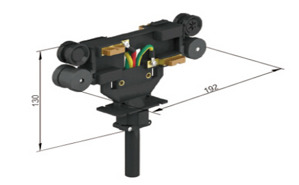
Current Collector for Enclosed busbar

Housing

Grey color, plastic housing, 4 Mtr standard section. The ground conductors is identified by international color code. Phase reversing prevented by design of the collector and housing.Higher number of conductors possible by combination of several enclosed conductor line.

Plastic Enclosed Housing

End Cover

The open ends of the enclosed conductor are closed by end caps.
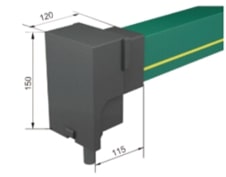
End Cover

End Power Feed

Line feeds or end feeds.

End Power Feed

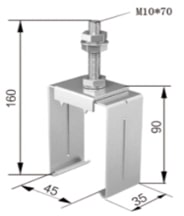
Hangar Clamp

Hanger Clamp

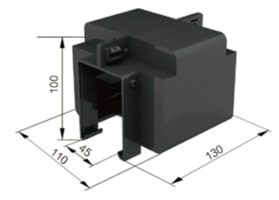
Joint Cover

Joint Cover

Wooden Box Packing for Safelink Enclosed DSL Busbars

A DSL busbar wooden packing box is a crate built from natural timber or commercial plywood, made to protect long, rigid conductor bars in transit. Safelink Enclosed conductors are supplied in full lengths, and each box is built to that length so the section is carried end to end rather than resting on two points.

Safelink DSL busbar conductor lengths packed inside an open wooden box
Conductor lengths seated in an open box before the lid goes on.
Wooden DSL busbar boxes closed with nails and steel strapping
Lids nailed down and closed with steel strapping.
Wooden DSL busbar packing boxes stacked ready for dispatch
Boxes stacked and ready for dispatch.

Why are DSL busbars packed in wooden boxes?

A down shop lead conductor is stiff, but it is not indestructible. Rest it on a truck bed without continuous support and the middle of the bar sags between the points it sits on. Add a few hundred kilometres of road to that and the bend does not come back out on its own.

This matters more for a busbar than it would for most freight, because a DSL busbar is not simply a length of metal — it is a running surface. The current collector rides along it for the whole life of the installation, and it can only hold even contact if the bar is straight. A conductor that arrives bowed either has to be pulled back into line during installation, or it goes up as it is and the collector shoe rides unevenly over that section from then on.

A wooden box removes the problem at the point where it starts. It supports the conductor along its full length instead of at two points, keeps the insulation away from chains, sharp edges and other freight sharing the vehicle, and gives forklift and crane operators something rigid to lift and stack. It also means the consignment can be handled at a transhipment point without anyone touching the bars themselves.

What is inside a DSL busbar packing box?

The conductor itself — aluminium or copper depending on the rating — in its insulated housing. Bars are packed in the full lengths they are supplied in, colour coded red, yellow, blue and green for the three phases and earth.

The accessories ordered with the system travel with them: joint covers, end covers, power feeds and current collectors. Smaller fittings are wrapped and boxed separately so they do not move against the conductors.

Packing the conductor and its fittings together matters on site. A crane that is waiting on a busbar run is usually a crane that is not earning, and a delivery that arrives complete can be installed in one visit instead of stopping halfway for a missing joint cover or hanger.

How is the box built?

Boxes are built from rough-sawn timber planks or commercial plywood sheets. Sides and lid are nailed to a frame, and the finished box is closed with steel strapping. Each one is sized to the bar it carries, so the contents cannot slide or roll inside it in transit.

This is deliberately heavy-industrial packaging rather than light cartoning. A crated consignment can be stacked, slung and moved by forklift when it reaches you, and the box is strong enough to stay closed until the bars are actually at the point of installation — which is the whole point of packing them this way.

How are the boxes handled and stored?

Boxes are stacked flat and kept clear of the ground so they are not standing in water. The same applies once they reach you: keep the box flat and supported along its length until the bars are needed, rather than standing it on end or leaning it against a wall, which reintroduces exactly the bend the packing was built to prevent.

If the run is being installed in stages, it is worth leaving the unopened boxes closed until each stage is reached. The timber is doing more to protect the shroud than anything that can be improvised on site.

Export packing

What packing is used for export orders?

For export consignments the boxes can be supplied in pinewood or rubber wood, and a fumigation certificate is issued with the shipment.

This is a requirement at the destination rather than at dispatch. Solid wood packaging moving between countries falls under plant quarantine rules, and customs at the receiving port will look for evidence that the timber has been treated before releasing the consignment. An untreated wooden box sent abroad can be held at the border, treated at the importer's cost, or refused entry outright — none of which is a good way to start a project.

Tell us the destination country when you place the order so the right timber and certification can be arranged for it. For movements within India, the standard rough-sawn timber or plywood box is used.

  • Pinewood or rubber wood boxes for export
  • Fumigation certificate issued with the consignment
  • Standard timber or plywood boxes for domestic despatch

Checkout out our other Busbar Products

Safelink W Busbar

Safelink W

Easy Maintenance Busbar, upto 315 Amps
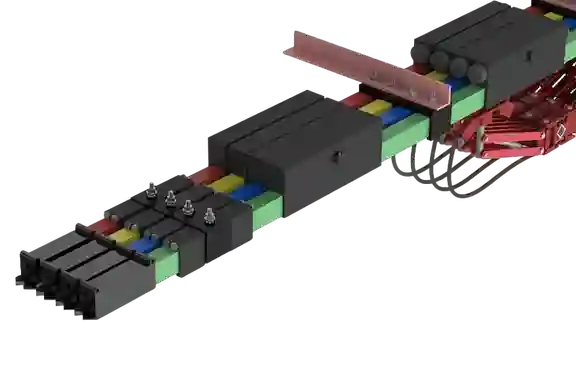
Safelink V Busbar

Safelink V

Copper & Aluminium Busbars, upto 1250Amps
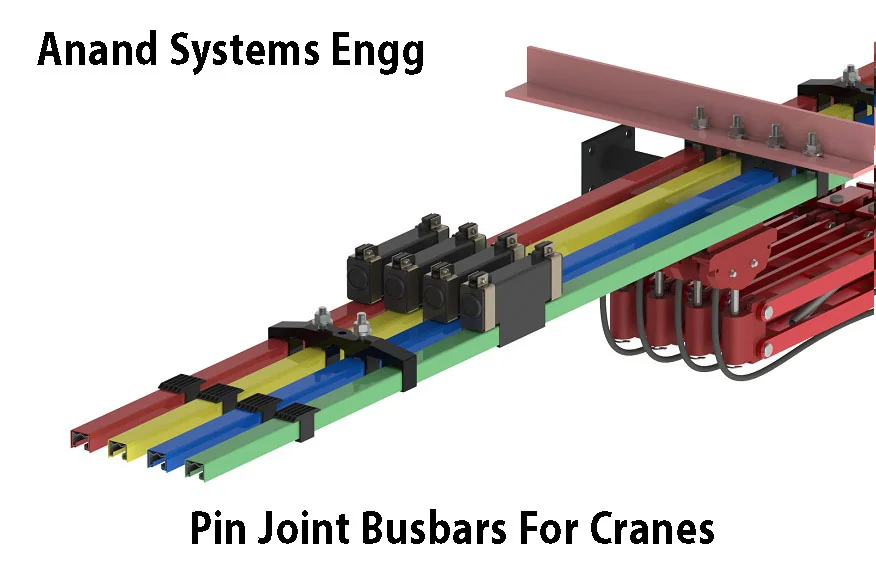
Safelink Enclosed Busbar

Safelink M

Copper & GI Busbars, upto 315 Amps

Request a Quote

Prefer to open this in a new tab?